
Every race director knows the feeling. You order 3,000 branded tote bags, hand them out at packet pickup, and a few weeks later you spot one in a thrift-store donation bin. The swag budget is real money, and a lot of it is in a landfill by the next weekend.
The problem is not that runners are ungrateful. It is that most race swag is forgettable. A cotton shirt that does not fit, a foam finger, a keychain, a water bottle that looks like every other water bottle. None of it earns a place in someone’s life.
The swag that works has one thing in common: runners actually use it. Here are the race giveaway ideas that survive past race day, roughly in order of how likely runners are to keep them.
What makes race swag worth keeping
Before the list, the rule. The best race swag is useful during the event you are promoting, not just after it. If a runner uses your giveaway on the course, every other runner sees it, and your sponsor’s logo gets hours of visibility instead of a glance at the finish line. Keepable swag tends to be:
- Useful on race day. Something a runner reaches for at mile 10, not something they pack away.
- Wearable or carryable. If it goes on the body, it goes everywhere.
- Not a duplicate. Every runner already owns five plain water bottles and ten cotton shirts. Give them something they do not already have.
Race swag runners actually keep
1. Hands-free hydration
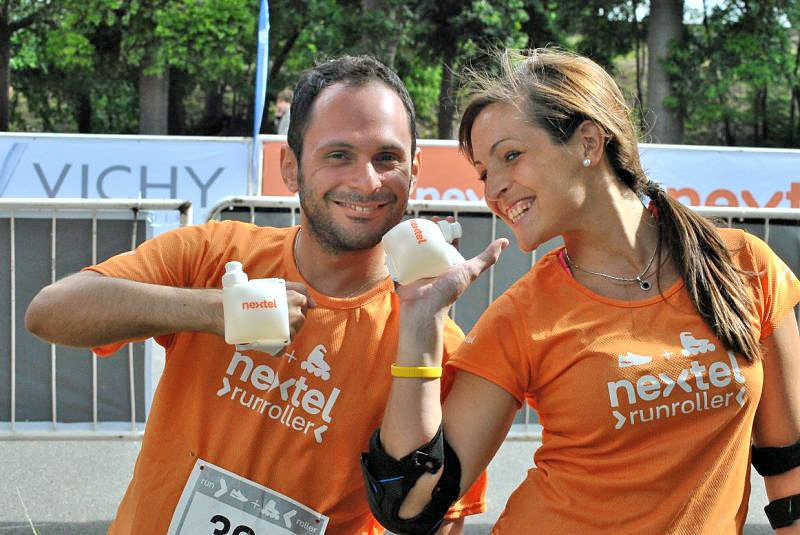
Water is the one thing every runner needs and the one thing that is awkward to carry. A wrist water bottle solves both. It straps to the wrist, holds enough for a short run or the back half of a long one, and leaves both hands free for a phone, a gel, or a high five at the finish. Runners wear it on the course, then keep wearing it on training runs for years.
Full disclosure: we invented the wrist water bottle, so we are biased. But the keep-rate is the whole point, and this is the rare giveaway runners still use long after the medal goes in a drawer. If you want to see how it works for an event, that is what our race event page covers.
2. Technical wearables
A good running hat, a neck gaiter, or a pair of real running socks beats a cotton tee every time. Runners wear technical gear because it works. Skip the fashion-cut cotton shirt that shrinks in the wash and spend the same money on something they will train in.
3. Recovery and practical items
A microfiber towel, a small blister kit, or an anti-chafe stick gets used the moment the race ends, and again on the next long run. Practical beats novelty. Nobody throws away the thing that fixed their hot spot at mile 20.
4. Reusable, not disposable
The cupless race movement is real, and runners have noticed. Giveaways that cut waste, like a reusable bottle instead of thousands of paper cups on the course, signal that your event pays attention. It is better for the planet and better for your brand, and it gives your sustainability sponsor something concrete to point to.
What to skip
Cheap plastic novelties, cotton shirts in one unisex cut, single-use giveaways that go straight in the trash bag at the finish. If you would not keep it yourself, your runners will not either. One useful item beats a bag of filler.
How to choose for your race
Here is the math that matters. Divide your swag budget by your field size to get your per-runner number, then pick the most useful thing at that price. One item runners keep beats three they toss, every time.
A few practical notes once you have a shortlist:
- Quantity. Custom-branded orders usually start at 50 units, so even a small race can put its name on something good.
- Branding. Get your logo and your title sponsor in your actual colors, not a generic stamp. It is the difference between swag and advertising.
- Lead time. Custom production takes time. Start six to twelve weeks out so you are not paying for rush shipping.
Pick the thing runners will still be using next season. That is the giveaway that keeps working for your race long after the finish line comes down.
From the makers of Swiggies
Swiggies is the wrist water bottle runners wear at mile 20. Custom-branded for your race, from 50 units.